Why Your Child’s Mornings Are So Hard: The 11 Skills Behind Every Routine
Executive skills are the brain’s invisible toolkit. When mornings feel chaotic, it’s often one of these 11 skills that’s struggling behind the scenes.
🌟 Why This Framework Matters
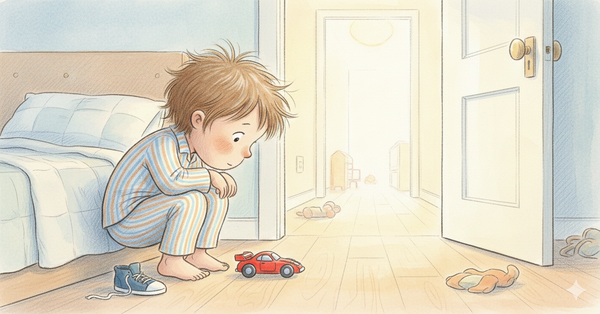
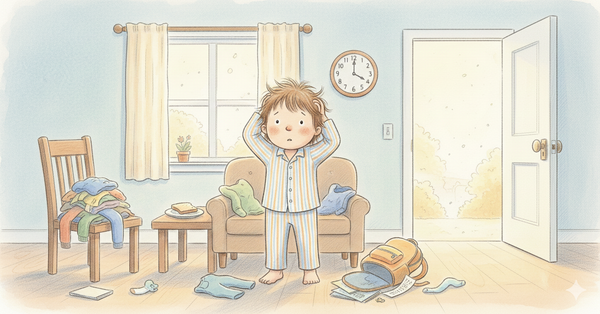
If your child’s mornings feel like a scramble of half finished tasks, missing socks, and rising emotions, you’re not alone. Many parents wonder, “Why is something so simple this hard?” The answer isn’t laziness — it’s the developing executive-function system, especially in ADHD.
To make sense of those tough moments, we’re using a research-backed framework from psychologist Dr. Peg Dawson, who organizes executive skills into 11 practical abilities. It’s a simple map for something that can feel chaotic.
This post gives you a quick tour of all 11 — just enough to recognize them in daily life. In the next posts, we’ll explore each one through the lens of a school morning.
🧠 The 11 Skills at a Glance
Executive skills are the brain’s “management tools.” They help a child start, continue, adapt, and complete everyday tasks — the very things that make or break a morning.
- Task Initiation: Getting started without excessive delay.
- Sustained Attention: Staying with a task long enough to move it forward.
- Impulse Control: Resisting the urge to do the more interesting thing.
- Goal-Directed Persistence: Keeping the end goal in mind.
- Planning / Prioritizing: Deciding what needs to happen first.
- Organization: Knowing where things go and how to set up a space.
- Working Memory: Holding short-term information (“What was I doing next?”).
- Time Management: Estimating and using time realistically.
- Emotional Regulation: Managing frustration, overwhelm, or disappointment.
- Flexibility: Shifting gears when plans change.
- Metacognition: Noticing what’s working — and what isn’t.
🔍 Why These Skills Predict Morning Stress
Picture a typical morning:
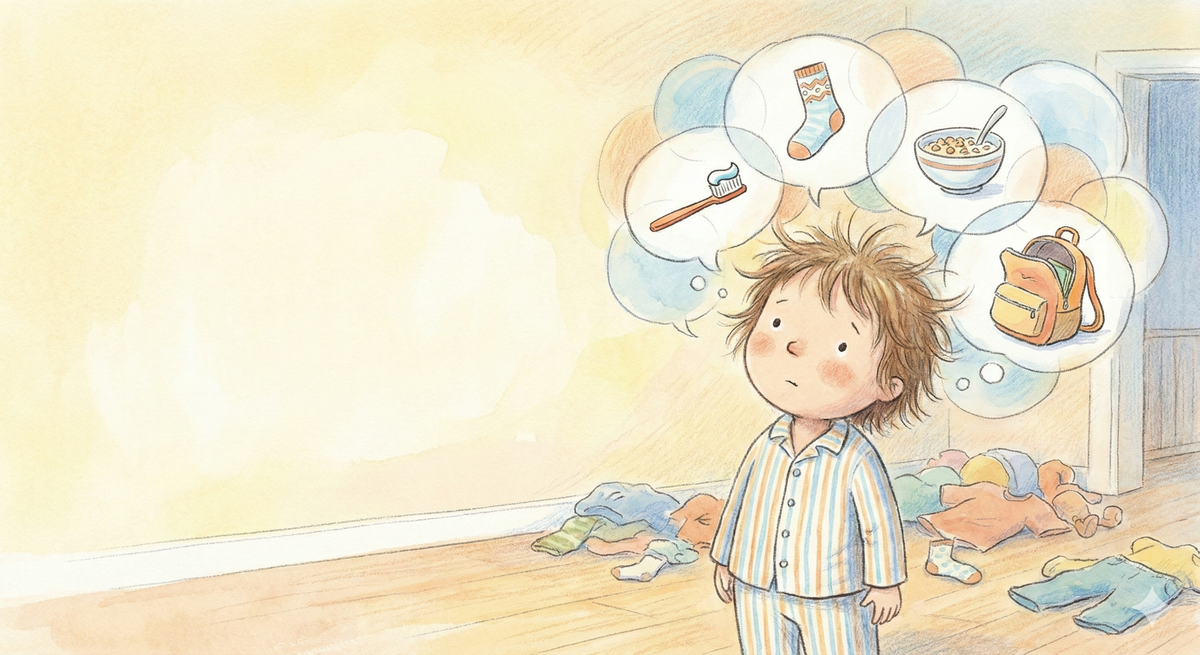
- A sock suddenly “feels wrong.”
- The backpack that was on the table has vanished into thin air.
- Breakfast isn’t the right shape today.
- Someone remembers a permission slip at the last possible second.
These aren’t random disruptions — they’re moments where multiple executive skills fire at once. A child must:
- Start the task (initiation)
- Stick with it even if bored (attention)
- Resist distractions (impulse control)
- Keep the final goal in mind (goal persistence)
- Plan the next steps (planning)
- Know where items are (organization)
- Remember what they’re doing (working memory)
- Pace themselves (time management)
- Manage emotions when things go wrong (regulation)
- Adjust to surprises (flexibility)
- Reflect on what worked today (metacognition)
When even one of these skills is still wiring up — let alone several — mornings can feel like a puzzle with shifting pieces. None of this is your fault, and none of it means your child isn’t trying.
🌱 What’s Coming Next
The next post shows how these 11 abilities interact during a morning routine — the “chain reaction” that either builds momentum or stalls it. After that, we’ll explore each skill one by one, with examples and practical supports you can use right away.
This content is educational, not medical advice.