What Your Child’s Morning Routine Reveals About Their Brain
What looks like morning chaos is actually your child’s brain in action. Here’s what that routine reveals about executive functions — and why every small win counts.
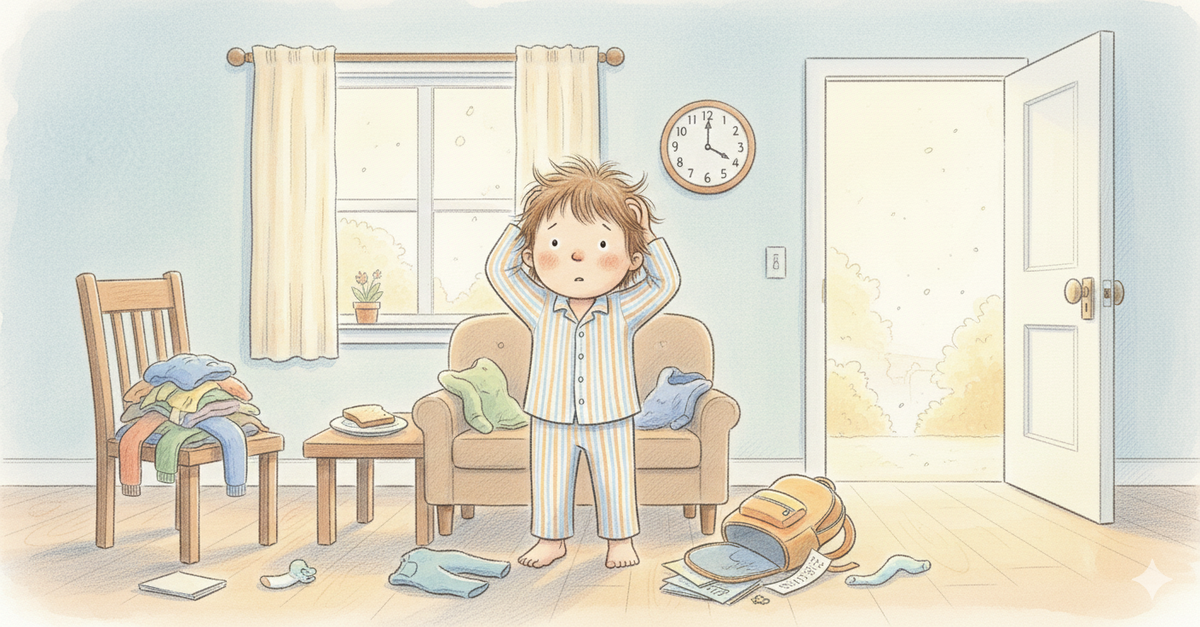
If your mornings feel like a small tornado — backpacks half-zipped, cereal still on the counter, the school bus pulling away — you’re not alone. What looks like chaos is actually your child’s brain at work, practicing a remarkable set of abilities called executive functions.
These are the brain’s “management skills.” They help us plan, start tasks, stay focused, control impulses, manage time, and regulate emotions. We don’t need them to survive like breathing or a heartbeat — but without them, daily life quickly falls apart.
🧭 The Brain’s Control Center
Executive functions live in the prefrontal cortex, the front part of the brain often called the brain’s “CEO.”
It’s the last area to fully mature — continuing to develop into the mid-20s. That’s why toddlers can focus for minutes while six-year-olds can handle twenty, and why teenagers sometimes act before they think. The system is still wiring itself.
🧒 Everyday Life: A Hidden Workout
Think about a simple school morning:
- The alarm buzzes.
- Your child decides whether to get up or hide under the blanket.
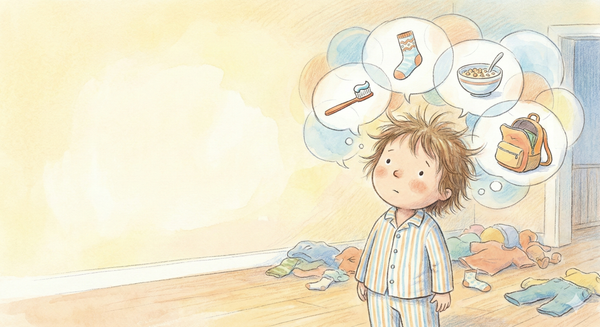
- They brush teeth, find clothes, eat breakfast, pack the backpack.
- By 7:30 a.m., they’re out the door.
It sounds routine — but it’s a neurological marathon.
To pull this off, your child’s brain must:
- Hold information (what to do next)
- Plan and prioritize (which task comes first)
- Manage emotions (cope with frustration or distraction)
- Stay flexible (adjust when something goes wrong)
These are the invisible gears of executive function turning together.
🌱 Growing These Skills
The first six years of life are when executive functions develop fastest, shaped by everyday experiences — family rhythms, reading together, conversations, play, and emotional safety. But growth continues well into adolescence and young adulthood. Every consistent routine is brain training.
So the next time your morning feels like a scramble, remember: you’re watching your child’s prefrontal cortex getting a workout. Each small success — brushing teeth without a reminder, finding the backpack, saying “I’m ready” — is a sign of those gears aligning a little better.
🔗 What’s Next
In the next post, we’ll break down the 11 core executive skills — attention, working memory, organization, and more — and see how each one shapes a calmer, more independent morning.